
Veteran Spotlight
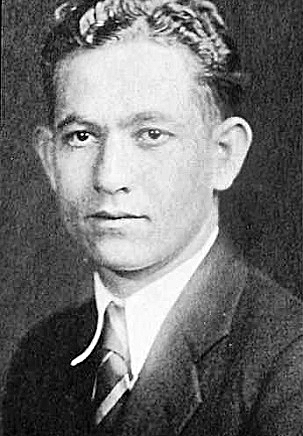
by Richard D. L. Fulton
Victor M. Wingate
WWII “Correspondent” for The News
“The ‘latrine rumors’ have it that the Nazis are about ready to fold up. Well, here’s hoping…”
~ August 2, 1944, Victor M. Wingate
Victor M. Wingate of Frederick County was born on February 24, 1911, in Wingate, Dorchester County, Maryland, to parents Charles Millard Meade and Carnelia Amelia Wingate, and had two brothers, Phillip Jerome and Francis Markham.
Wingate graduated from Crapo High School in Dorchester County. He subsequently received his bachelor’s and law degrees from the University of Maryland (UMD), where he had also participated in freshman football, varsity lacrosse, and varsity boxing. He also served after graduating from UMD as a recreational director for the Frederick County Works Progress Administration (WPA).
Wingate registered for the draft on October 16, 1940, at 29 years of age. His place of employment at the time was stated as working as a postal clerk in the Wingate Post Office. His draft card stated that Wingate was 5’9” and weighed 165 pounds when he registered, having brown eyes and hair and a ruddy complexion and possessing a scar at the corner of his left eye.
On April 19, 1941, Wingate married Marjorie V. MacDonald at the First Methodist Church in Brunswick by the Reverend Norman L. Trott.
Wingate, who was enlisted on July 27, 1943, and served with the Army Mobile Post Office (MPO), was initially deployed to England, and, as the summer of 1944 encroached, the MPO was moved close to the English Channel, which convinced Wingate that a crossing (into Normandy) was imminent. He also achieved the rank of corporal before his deployment to the European front.
Soon after D-Day, in addition to attending to his MPO duties, Wingate began to write a column for The (Frederick) News from June through August 1944, becoming somewhat of a war correspondent for the newspaper. The Salisbury Times began to run Wingate‘s articles in September and October 1944.
His articles ran the gamut from the humorous to the tragic, initially commenting on the English, such as writing, in reference to the “cockney” accent, “Whenever the English fail to understand our ‘Improved American language,’ we are inclined to believe that the English don’t understand the English language.” (July 15, 1944, The News).
As the MPO advanced behind the Army through Normandy, Wingate wrote, “The American received no ‘wild welcome’ from the French… but big parading, bell ringing, and flower throwing you may have read about was the product of some reporter’s imagination.” (July 25, 1944, The News).
Regarding a small coastal town in Normandy (which he did not name), Wingate wrote about the Army encountering a defiant German defense, stating, “… they [the Germans] fought with the fury of fanatics until many of them had been killed by the ‘Pickett charging’ Yanks…” (July 29, 1944, The News).
Humor occasionally crept back into his columns, such as the one posted in the August 24 edition of The News, in which he described a captured German foxhole, which he dubbed the Brown Bear’s Boudoir, and described as being “decked out” with a dresser, pictures, and mirrors. “The Nazi’s must have a lot of effort on it before we came along and served them with an eviction notice.” His only complaint was that his “apartment” had no screen door, and “every night the mosquitoes queue up at the entrance as the British do for fish and chips.”
Post-war, Wingate served as the chief of the Maritime Claims Division of the Judge Advocate General of the Army until the time of his death. He served as the first civilian chief of that division, beginning in 1963, when the office was located in Fort Holabird, according to his obituary published in the January 26, 1972, issue of The (Baltimore) Evening Sun.
Wingate passed away at Fort Meade at age 60 on January 25, 1972. Funeral services were held at the Toddville Methodist Church in Dorchester, and he was buried in the family cemetery in Wingate.
