
My First Ambulance Ride
By JEFF YOCUM
It was the night before Christmas / And all through the house / Not a creature was stirring / But for the guy crying, “OUCH”!
That guy was me, and I was having the first, real medical emergency of my 70-year life. Getting up from bed to go to the bathroom, I fell uncontrollably to the floor, hitting my head on furniture on my way down. It was then that I realized I had no control over my entire left side.
My wife heard the crash and rushed back from the bathroom. My good fortune at that moment was I had married a woman who had spent the past 47-seven years as an ICU nurse. What I was ready to dismiss as my leg “falling asleep,” she recognized as a probable stroke. She quickly evaluated me with a simple neuro-assessment test. My responses confirmed her suspicions. Despite my protests, she called 9-1-1, describing the symptoms and timing of the event. Although I didn’t realize it, I was “on the clock” from that point on.
Lindsey Brittle, Kenneth Fields, and Alexander Mateo, the three-person team from Thurmont Ambulance Company, arrived just moments later. From what I can remember, they evaluated me again and checked my vitals. They also began communicating with the Emergency Department at Frederick Health Hospital.
Frederick Health Hospital’s stroke team was kept apprised of my status during my trip down US 15 to Frederick. We were met at the door by the stroke team.
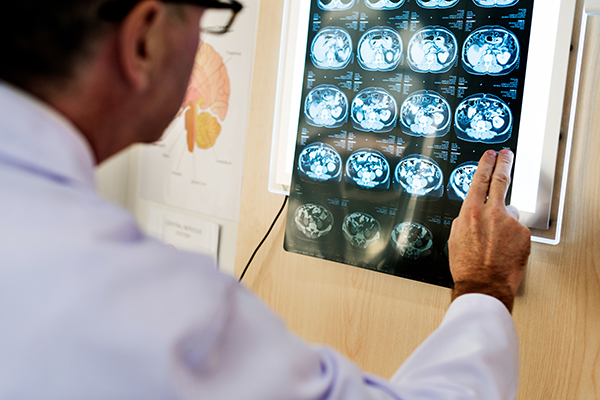
My wife followed separately. By the time she made it to my bedside, I had already had a CT scan of my brain, as well as a CT angiogram. As I learned later, these tests were looking for a possible brain bleed that would have indicated a hemorrhagic stroke or a large vessel blockage. The scans showed neither. This made me a candidate for TNK, a clot-busting medicine. It has its own risks, as most treatments do. It was my decision whether to take the TNK route over other options. I am so grateful I chose the TNK.
Within a few minutes, I could feel my fine motor skills returning to my left side. I could touch my nose with my forefinger without difficulty. Relief washed over me. All of this happened in less than 75 minutes. I had beat the clock.
For the first time since I was a newborn, I was admitted to a hospital ―and the ICU, no less. My meager writing skills cannot describe well enough the level of professionalism, compassion, and the sensation of being a priority that I experienced at Frederick Health Hospital. Every single interaction I encountered from the Emergency Department to the ICU to the Imaging Department, I received nothing but the best treatment. I distinctly remember the fellow from the Patient Transport Team wishing me a speedy recovery as he finished his task and was off to his next task.
A little less than 36 hours after the clock started at the beginning of my ordeal, I rolled out to my car to go home. I had no requirement for rehabilitation or other treatments. There’s a minor dosage adjustment to my previous medications. That’s all.
The Moral of the Story
ACT FAST
Once a clot hits the brain, oxygen-laden blood is denied to some portion of the brain. Brain cells, neurons, and synapses are dying. Your chances of full recovery are declining and the odds of permanent disability—or even death—are increasing. The clock is ticking.
I walked away (literally) from this incident, not because the clot in my brain was minor, but because I was the beneficiary of a well-established apparatus of protocols and dedicated people. I walked away because my wife ignored my desire to wait and see. She picked up the phone and set the apparatus into action.
