
Looking Back
Huckleberry Fires Devastate Catoctin Mountain
by James Rada, Jr.
Picking huckleberries may have caused one of the largest fires ever that ravaged Catoctin Mountain in 1902.
In April, wildfires sprang up at different locations on Catoctin Mountain. Fueled by gusty winds, they grew and spread. Within a few days, the fires had grown to encompass an estimated 12,000 acres, and many people were saying it was the largest mountain fire they had ever seen in Frederick County.
It attracted so much attention that The (Baltimore) Sun sent a reporter to the scene to report on it. “For a distance of seven miles between Thurmont and Emmitsburg the whole mountainside of the Blue Ridge range is one roaring blaze and is sweeping everything before it, as the trees and fencing,” The Sun reported.
The Catoctin Clarion described it this way: “The mountain at night was (a) sight calculated to thrill, as there were as many as six or eight wavy or zigzagged fire lines visible on the four jutting faces between the Little Owens Creek, Owens Creek, Hunting Creek, High Run, and Furnace Creek gorges.”
With the fires on the mountain, the damage to homes and businesses in Northern Frederick County towns was minimal. Then the Blue Mountain School on Hunting Creek burned down. The loss of the 25 x 36-foot school and its contents was estimated at $800 (about $48,000 today), but the school had $500 worth of insurance covering part of the loss.
People worried as the flames approached Catoctin Furnace and Thurmont. The men in the towns formed bucket brigades to wet the buildings nearest the fires, and they dug trenches to create fire breaks. The women and children filled everything they could find with water, so the men on the bucket brigades had enough to soak the structures.
It helped, but then Catoctin Furnace School burned down less than a week after Blue Mountain School. This fire happened between 6 a.m. and 7 a.m., and it was a complete loss.
“When discovered by people living in the neighborhood, the flames made such progress that it was impossible to enter the building and save any of its contents,” The (Frederick) Daily News reported.
The small 25 x 36-foot school was an estimated $400 (about $24,000 today) loss, and the furniture and books were another $200 (about $12,000 today). The school had no insurance. After five days, the fires had consumed an estimated 30 square miles, roughly 12,000 acres.
Given the fact that the fires were starting in different places, the cause was believed to be one or more arsonists.
“It is a misfortune that these firebugs are able so easily to avoid detection as a good, solid dose of penitentiary would probably exercise a deterrent effect,” the Catoctin Clarion reported.
Although someone started the fires, they might not have wanted to cause such devastation.
In the early 1900s, huckleberry farmers worked differently than a typical farmer. They didn’t cultivate a field and harvest it. They managed wild berry patches.
To improve their patches, huckleberry farms burned away competing brush and small trees from the huckleberry patches. With more room, huckleberry patches expanded and increased their yields.
However, fires intended to rejuvenate a berry patch could escape during dry weather and spread into surrounding woodland. With the gusting winds that were happening at the time, it is quite easy to believe cinders from one or more huckleberry fires could have blown into the forests and started new fires, or the existing fires could have simply gotten out of control.
Another way the huckleberry farmers caused fires was that they simply weren’t careful. A discarded cigarette, an emptied pipe, or a campfire that wasn’t fully extinguished were all known to have caused fires from huckleberry farmers.
As neighbors near Catoctin Mountain joined together to save each other’s homes, they cleared land to create fire breaks. These bare swaths eventually stopped the progress of the fires. It gave water brigades time to extinguish the nearest fires while the rest burned themselves out.
With luck and a lot of determination, few buildings and no lives were lost from the fire.
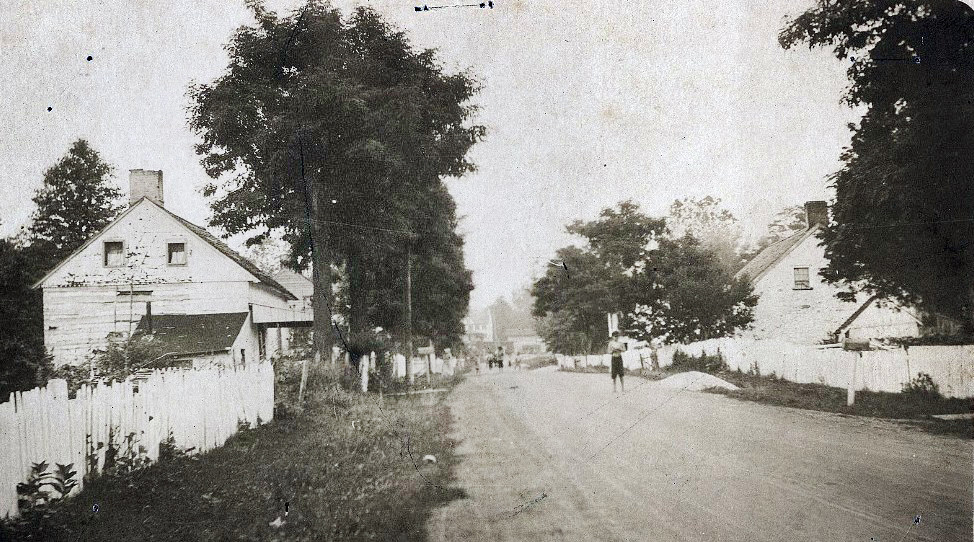
Catoctin Furnace, which was in danger of being burned down in the wildfire.
Photo Courtesy of Thurmontimages.com
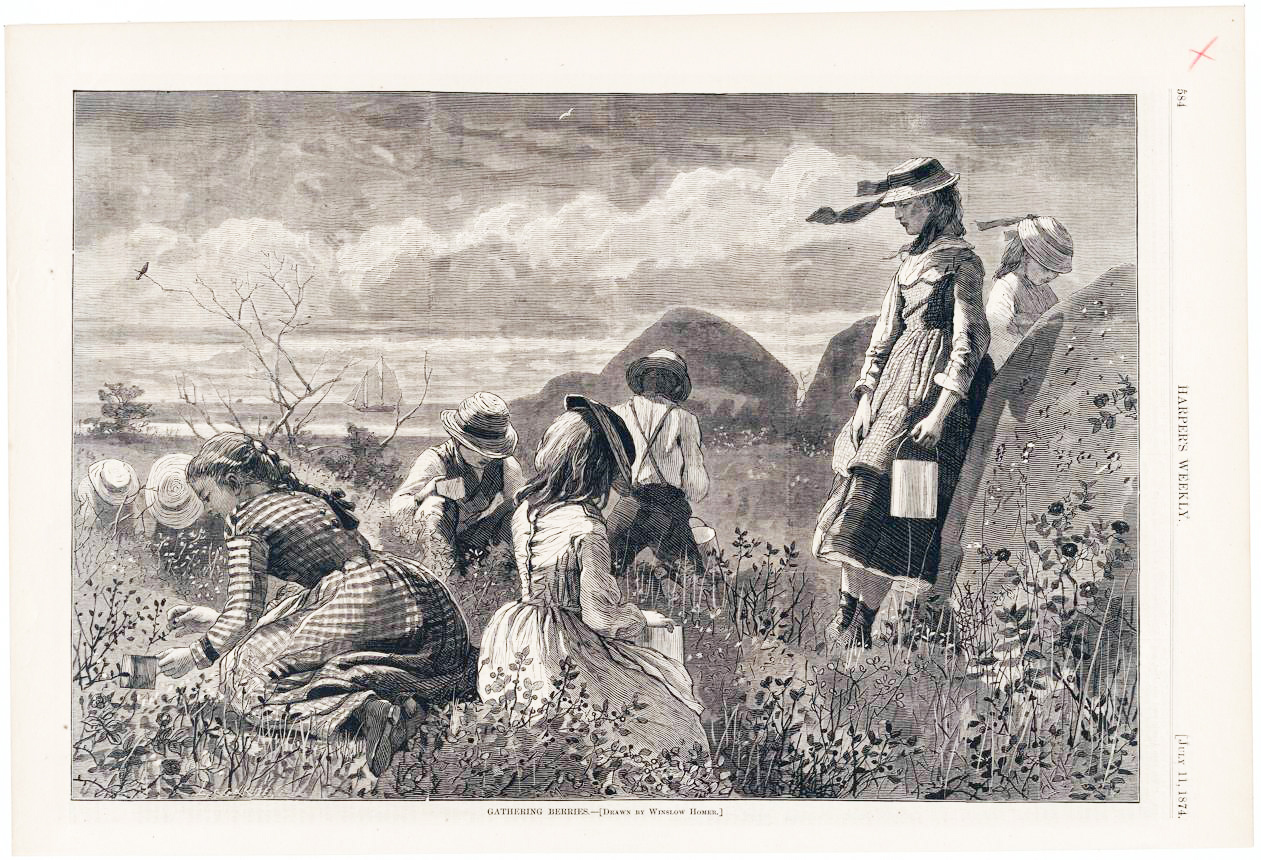
A drawing of huckleberry picking from Harper’s Weekly, July 11, 1974.
Photo Courtesy of Wikimedia Commo
