
Look Up
by Mitchell Tester, College Student
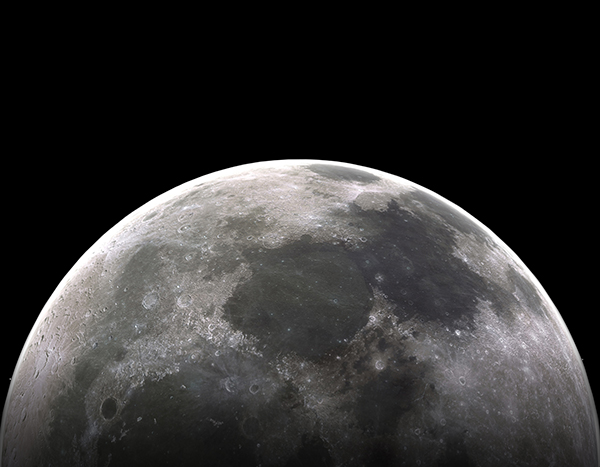
When one talks of the universe, what comes to mind for me is outer space. Planets, moons, asteroids, and galaxies. Although the universe is everything around us, we are connected to everything. My favorite space fact is: We are made up of star dust. Meaning us, the grass on your front lawn, the paper or screen you are reading this on, and all the animals in the world are made up of what comes from dead stars. We are all made up of the same things, which to me, at least, means we are all connected to some degree. So, for this month, I would like you to not “look up” as usual, but to “look down.”
Animals are something very dear to my heart. I have had pets my whole life growing up. Dogs, cats, and even rats. I have loved every one of them. Dogs, in particular, are very special to me and probably most of you. They’re curious creatures and full of love. They are called man’s best friend for a reason. However, I would like to touch upon some animals that are often neglected to some degree, animals that are seen more as a product than a sentient creature. It is a cultural thing, really. One of my favorite songs from the hardcore band Gorilla Biscuits (weird name, I know) is called “Cats and Dogs.” The lyrics are as follows: “We eat to stay alive, but it’s their lives we steal. I think we’d like to change, but most of us are stuck, that’s why cats and dogs have ALL THE LUCK.”
The song raises a real question: Why do cats and dogs have all the luck?
I am not going to delve into the why. I think it’s irrelevant to a certain degree. People will continue to eat cows, chickens, pigs, and many other animals until the end of time, and it is their right to do so. Instead, I want to share with you how truly remarkable these animals are, and how, like dogs, they are full of love, curiosity, and emotion.
Let’s first start with the cow. Cows are often referred to as big puppies by farmers. They often act smaller than they actually are, sitting on and cuddling up against their owners. Similar to a Great Dane who wants to sit on their owner’s lap but doesn’t realize its own colossal size. Cows are also very intelligent; more intelligent than most people think. I mean, all they do is eat grass and chew the cud most days, right? Well, no, not exactly. Cows have the ability to form close bonds with those in their herd, often exhibiting stress—an emotion that we humans know far too well—when they are separated from their friends. A study found that cows, like dogs, love solving complex problems for a reward, releasing serotonin when solving these puzzles. Serotonin is the feel-good stuff that we humans also release when doing tasks or activities that we enjoy. Cows are also great at remembering. Besides being able to remember locations, such as where their food and water are, they also remember the faces of their herd mates and even you! Cows can experience joy, stress, frustration, anxiety, and even sadness. They often depend on their herd mates for emotional support. Studies show that they can be less stressed when being handled by a human if they can see or be near their herd mates. Cows, like dogs, love to play with a ball and play-fight. Just as a dog or cat knows their name, cows do as well. They often will let their herd mates know how they feel through their “moos,” which, in result, allows their herd mates to console them. You can think of it as empathy in a sense, realizing that one close to you feels bad and being there for them to make them feel better.
The next animal in line is the pig. Pigs are also very intelligent creatures. They can remember faces, they experience a wide range of emotions, and they can even learn from their mistakes. Pigs are found to be highly social creatures. Humans are considered by many to be the only animal that uses tools, but a study has found that pigs will use tools as well. They have been observed using sticks and other small pieces of wood to help them dig dirt. Similar to the cow, the pig also shows empathy, the ability to recognize ill feelings in others. They also communicate with each other using over 20 distant sounds; they can express happiness, discontent, and stress (among many other emotions) through these sounds. Pigs are often seen as dirty animals, but studies found that (like rats) they chose to go to the bathroom elsewhere when given the chance to maintain the cleanliness of their living space.
Now, for the last unappreciated animal, the chicken. Chickens are very curious creatures and are even able to show a level of self-control and critical thinking! One study found that when given a small amount of food in a short amount of time, chickens were inclined to wait (practicing self-restraint) and receive a larger amount. This shows critical thinking. This speaks to them not being mindless creatures as many make them out to be. Like pigs and cows, they also have a great memory. They can remember the faces of humans and animals alike. Mother hens have the same nature as human mothers do; they fiercely defend their young and are very nurturing. Chickens are also capable of dreaming, just as dogs are.
What all of this shows is that these animals are highly intelligent, individualistic, and feeling creatures. They have needs and wants just as we do, just on a smaller scale. It reminds you of a child in a sense. Of course, these animals do not feel just as we do; they don’t have aspirations like we humans do. Although, feelings such as pain are very visceral and universal amongst us animals. Think of when you are in pain; what are you thinking about besides the pain? It’s a very primal and instinctual feeling.
I am not trying to persuade anyone to stop eating animals—that is a personal decision—but rather, consider only getting your meat from local farms that treat their animals kindly and humanely.
I think we can all agree that animals deserve the utmost love and respect. One point I want to make clear is this: Animals give us everything and ask for nothing in return—that’s the definition of selflessness, isn’t it?
