
From Calf to Show Ring
An FFA Project Series
by Makayla Comer
Makayla Comer is a junior at Catoctin High School and a member of the Future Farmers of America (FFA). She is serving as the 2025-2026 Thurmont & Emmitsburg Community Show Ambassador and currently serves as Social Media Coordinator. In this monthly series, Comer will take readers behind the scenes of what it takes to raise both market and breeding cattle, sharing her journey as she prepares to show at the Carroll County Fair and the Thurmont & Emmitsburg Community Show in 2026. Comer and her family own and operate a cattle farm in Rocky Ridge, Maryland. Readers are invited to follow along as she shares the dedication, responsibility, and hard work involved in raising cattle.
My name is Makayla Comer, and I’ve been showing and exhibiting cattle for nine years at the Carroll County Fair and, more recently, at the Frederick Fair and the Thurmont and Emmitsburg Community Show. My family and I started our farm in 2017, and we have grown so much since then. I have been given the opportunity to share the progress and hard work into owning and showing cattle.
For my 2026 market and breeding projects, all animals were born and bred on my farm. The steer I plan to take to the Thurmont and Emmitsburg Community Show in September is a Maintainer named Fort Worth. Fort Worth was born on March 25, 2025, and was the last calf born on my farm. I also plan to bring two heifers to the community show: my Maintainer heifer, Montana, and my shorthorn plus heifer, Daytona. A Maintainer is a cattle breed that comes from a Maine-Anjou cow or bull that is mixed with a different breed. It can be mixed with almost any breed, like Angus, Shorthorn, or Hereford. Fun fact: Shorthorns are one of the rarest breeds of cattle. Many people ask me what the difference is between a steer and a heifer. A steer is a bull that has been castrated. Removing the testicles, so the boy can produce fattier meat instead of muscle. A heifer is a female cow that hasn’t had a baby yet. Once a heifer has a baby, she is called a cow.
When you are looking for a show cow, you typically would like to have them born around January through March, due to having to weigh a certain amount by your fair. My steer is eligible to be shown at the Carroll County Fair, and be weighed in on January 17. The minimum weight that the market animal needs to be for the Thurmont & Emmitburg Community Show is 1,100 pounds.
Weigh-ins are important to the owner of a market animal. The weight the animal registers at the weigh-in in January becomes the official starting weight for that animal. The weight is recorded. The owner uses this information to make decisions on how much to feed and exercise their animals throughout the process of between 15-18 months. Many owners have their own scales and will weigh their animals. The official weigh-in data is used to determine the rate of gain for animals and is the official weight that is recorded for the shows.
I have been working with my steer and heifers almost every day since we weaned our calves back in September. Weaning is the process in which you remove the calf from its mother, so the mother can then be bred again and focus on providing food for the next baby she is producing. This usually occurs between 4-6 months of age.
When a calf is born on our farm, we will put an ear tag in, so we know whose calf it is and when the calf was born when we add it to our records. The tags are a form of identification that helps us tell the calves apart. The show committee will remove farm tags from the market project and replace them with the required tag for their specific shows. We also tattoo their ears as a permanent form of identification. The tattoo is a permanent identification that is used to identify at a show officially through the registration papers.
As my steer and heifers continue to grow, I plan to share my knowledge so that everyone can learn about what happens beyond the show ring.
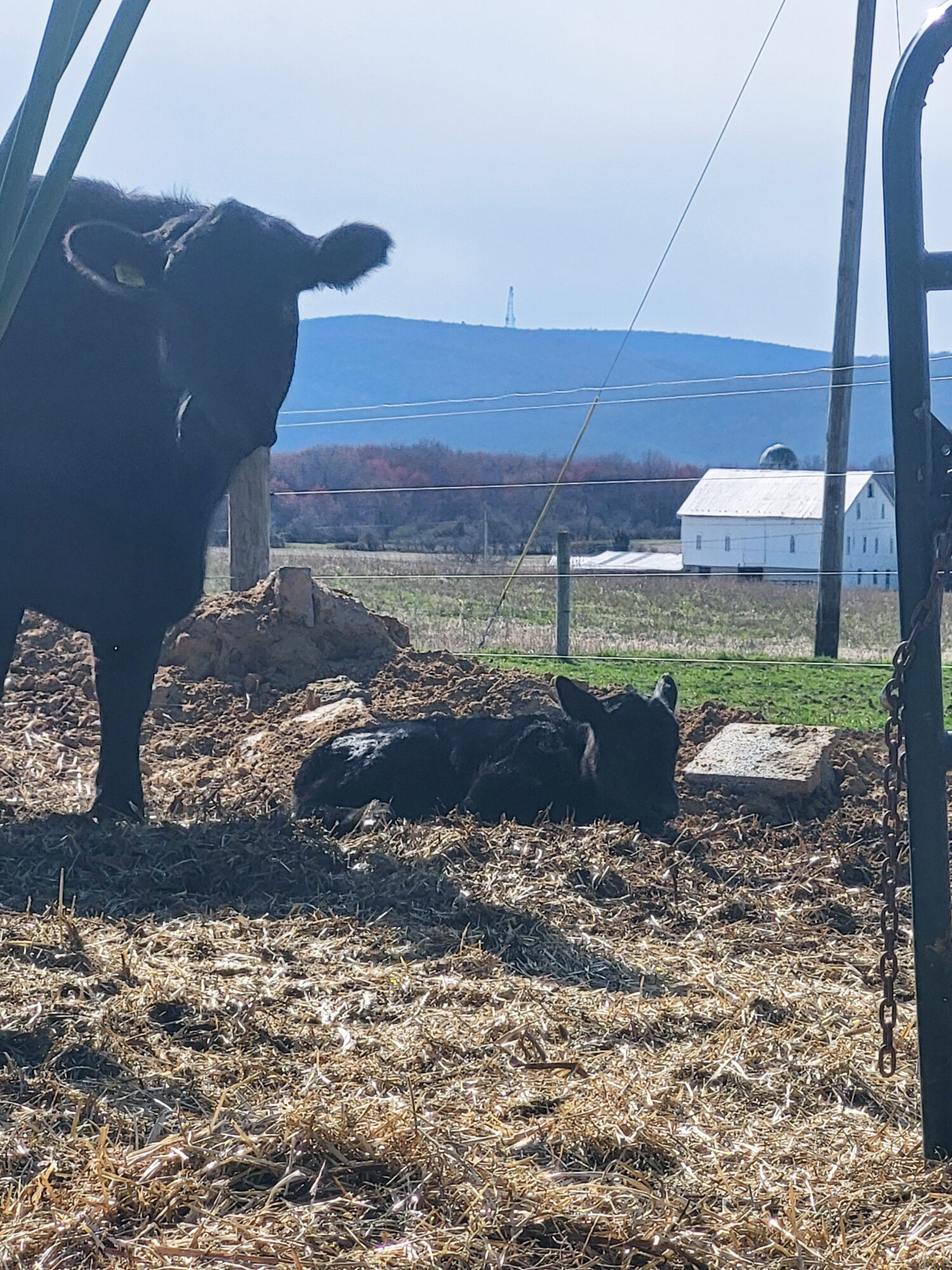
Fort Worth is born on March 25, 2025.
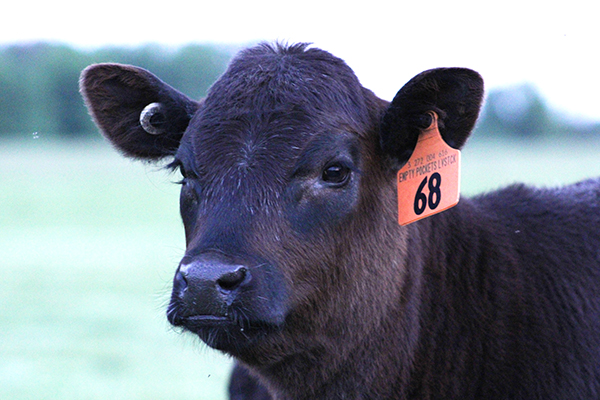
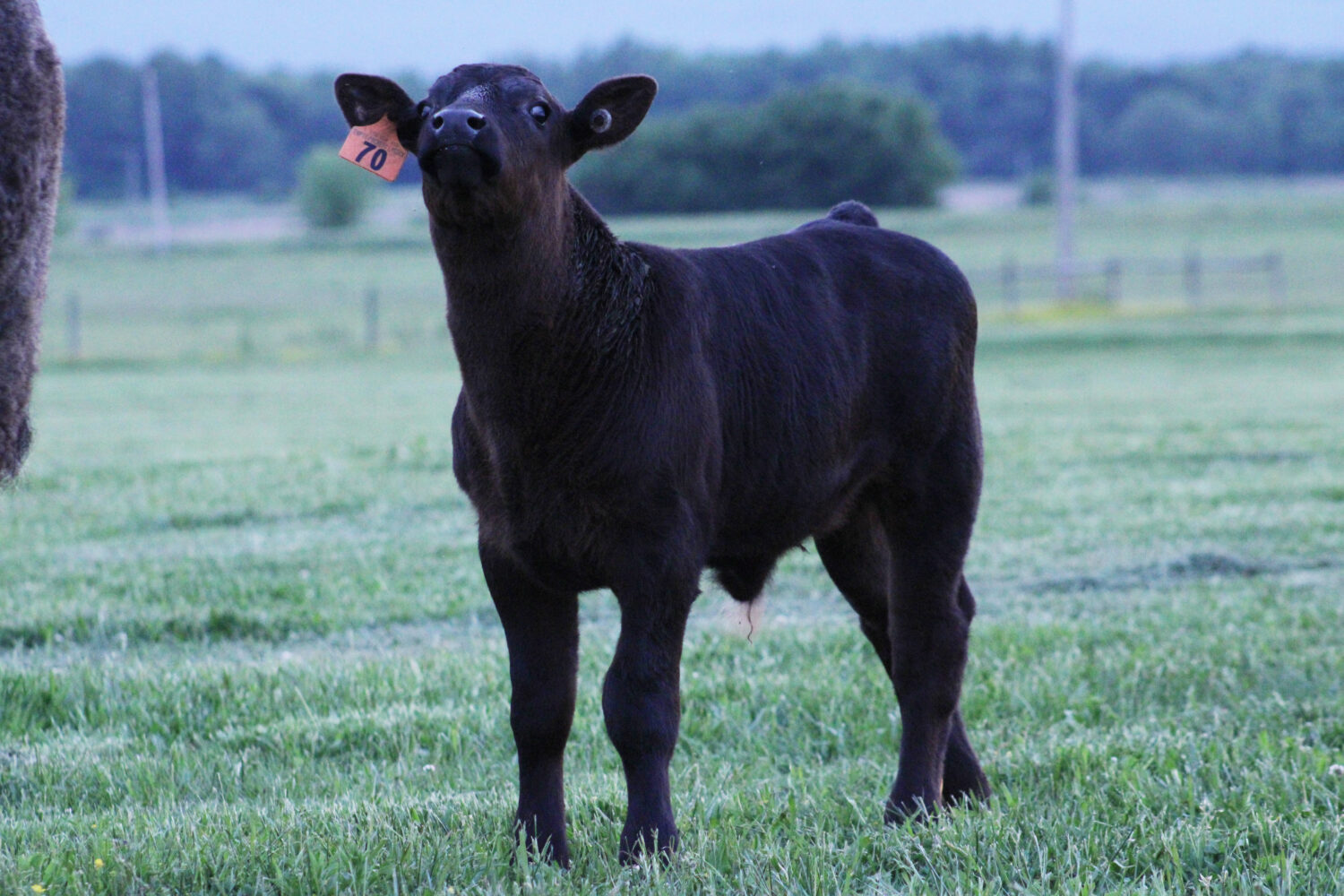
Fort Worth poses twice for the camera on May 11, 2025.
My name is Makayla Comer, and I’ve been showing and exhibiting cattle for nine years at the Carroll County Fair and, more recently, at the Frederick Fair and the Thurmont and Emmitsburg Community Show. My family and I started our farm in 2017, and we have grown so much since then. I have been given the opportunity to share the progress and hard work into owning and showing cattle.
For my 2026 market and breeding projects, all animals were born and bred on my farm. The steer I plan to take to the Thurmont and Emmitsburg Community Show in September is a Maintainer named Fort Worth. Fort Worth was born on March 25, 2025, and was the last calf born on my farm. I also plan to bring two heifers to the community show: my Maintainer heifer, Montana, and my shorthorn plus heifer, Daytona. A Maintainer is a cattle breed that comes from a Maine-Anjou cow or bull that is mixed with a different breed. It can be mixed with almost any breed, like Angus, Shorthorn, or Hereford. Fun fact: Shorthorns are one of the rarest breeds of cattle. Many people ask me what the difference is between a steer and a heifer. A steer is a bull that has been castrated. Removing the testicles, so the boy can produce fattier meat instead of muscle. A heifer is a female cow that hasn’t had a baby yet. Once a heifer has a baby, she is called a cow.
When you are looking for a show cow, you typically would like to have them born around January through March, due to having to weigh a certain amount by your fair. My steer is eligible to be shown at the Carroll County Fair, and be weighed in on January 17. The minimum weight that the market animal needs to be for the Thurmont & Emmitburg Community Show is 1,100 pounds.
Weigh-ins are important to the owner of a market animal. The weight the animal registers at the weigh-in in January becomes the official starting weight for that animal. The weight is recorded. The owner uses this information to make decisions on how much to feed and exercise their animals throughout the process of between 15-18 months. Many owners have their own scales and will weigh their animals. The official weigh-in data is used to determine the rate of gain for animals and is the official weight that is recorded for the shows.
I have been working with my steer and heifers almost every day since we weaned our calves back in September. Weaning is the process in which you remove the calf from its mother, so the mother can then be bred again and focus on providing food for the next baby she is producing. This usually occurs between 4-6 months of age.
When a calf is born on our farm, we will put an ear tag in, so we know whose calf it is and when the calf was born when we add it to our records. The tags are a form of identification that helps us tell the calves apart. The show committee will remove farm tags from the market project and replace them with the required tag for their specific shows. We also tattoo their ears as a permanent form of identification. The tattoo is a permanent identification that is used to identify at a show officially through the registration papers.
As my steer and heifers continue to grow, I plan to share my knowledge so that everyone can learn about what happens beyond the show ring.
