
Canines of Maryland Past & Present
by Richard D. L Fulton
The appearance of the ancestor of all canines, or canids, may not have occurred had it not been for an immense meteor which struck the earth some 66 million years ago, triggering a “nuclear winter,” lasting for more than 25 years, during a time frame known as being the Cretaceous Period.
As a result of this impact, it has been estimated that some 2,000 gigatons of pulverized rock was ejected into the atmosphere, thereby blocking out the sun and plunging the earth into a near ice age, which then resulted in the extermination of more than 75 percent of the species then living on the planet, including the dinosaurs.
But one group managed to survive, that being the first mammals, who had begun to appear on Earth more than 200 million years ago, but remained rather insignificant among the fauna, as long as the dinosaurs ruled the earth. When the dinosaurs were removed from the scene, the mammalian evolution exploded.
The rapid domination achieved by the mammals paved the way for Miacis, an early stem carnivore that served as an evolutionary ancestor to the canids.
Maryland’s Oldest Canines
So very little is known of what mammalian creatures had inhabited Maryland until much later in time … that when the last ice age had locked up so much surface water on Earth, the seas that had once covered Maryland then receded, thereby exposing hundreds of miles of land that would quickly serve as home to extensive tundra, marshlands, and forests of conifers, such as spruce, fir, and pine trees.
As a result, most of the post-Cretaceous vertebrate remains that are found in Maryland tend to be those that are preserved in caves.
One exception, however, appears to be findings of the remains of a circa 12-million-year-old canine, Cynarctus, dubbed “Bone Crushers” because their teeth were clearly adept at smashing the bones of their no-doubt sometimes sizeable prey—whether live-killed or scavenged—to smithereens, presumably to gain access to the bone marrow.
Only a few teeth of the coyote-sized Cynarctus have been recovered from the escarpments along the western shores of the Chesapeake, known as the Calvert Cliffs. While these cliffs are primarily clay, marl, and sand beds deposited in the oceanic Salisbury Embayment, occasionally, the remains of land animals are found, whose teeth and bones had been washed into the ocean via rivers and streams, in which proximity the animals had then lived and died.
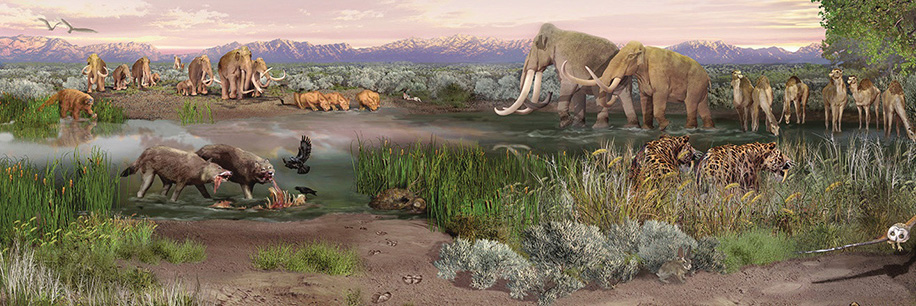
From the Miocene, one needs to flash forward to the Ice Age, before encountering any prehistoric bone deposits containing canine remains, and the Cumberland Bone Cave in Allegany County has proven to be explicitly just such a site.
Among the finds there were the remains of the Armbruster’s wolf Canis armbrusteri, a wolf that may have been the ancestor of the more infamous dire wolves of the California Le Brea Tar Pits. The species is sometimes referred to as Aenocyon armbrusteri.
The Armbruster’s wolf thrived in Maryland until around 250,000 years ago. The best remains found of the Armbruster’s wolf occurred in the form of a nearly complete skull, less the lower jaw. Armbruster’s wolves were large and robust animals, as compared to other members of the canids, weighing at an estimated 125 pounds and were as tall as the modern-day gray wolves.
Remains of a second prehistoric wolf, the cave wolf (Canis priscolatrans), also known as the Port Kennedy cave wolf, were also found in the Cumberland Bone Cave, and may have been ancestral to Armbruster’s wolf. Some authorities have argued that the species’ name is synonymous with Canis edwardi, a “coyote-like” canine.
The cave wolf appears to have been about the size of the modern-day red wolf, weighing as much as 55 pounds. Referred to as being a “cave wolf” in the Smithsonian Institute’s publication Middle Pleistocene Cumberland Bone Cave Local Fauna, Allegany County, Maryland (2025), the animal may have originally been dubbed a cave wolf simply because the remains were discovered in caves. The true cave bear (Canis lupus spelaeus) remains have only been found in Europe.
The Canis priscolatrans became extinct in Maryland and elsewhere around 300,000 years ago.
Canines in the Present Times
Based in part on information provided by the Maryland Department of Natural Resources (MDNR), red and gray wolves (Canis lupus) once inhabited Maryland but were exterminated in the state in the 1800s as the result of hunting, trapping, and bounties.
The red fox (Vulpes vulpes) is found throughout Maryland and generally measures up to three feet in length and weighing 10-15 pounds, and easily identified by their rusty-red coat, bushy, white-tipped tail, and black “socks.”
The gray fox (Urocyon cineroargensius) also ranges throughout Maryland and is generally a little smaller than the red fox, being up to 44 inches in length and weighing up to 15 pounds, and is gray with some reddish colorization, and additionally, lacks the white-tipped tail of the red fox.
Eastern Coyotes (Canis latrans) occur statewide in Maryland, initially occupying Cecil, Frederick and Washington counties. According to the MDNR, “Coyotes are a relatively new addition to local ecosystems and were first documented in Maryland in 1972.” However, Canis latrans actually occupied Maryland tens of thousands of years ago, according to the Cumberland Bone Bed finds.
Coywolves are hybrids of coyote and wolf, and in some cases domestic dogs, and as being somewhat omnivorous (eating meat and vegetative materials), and generally attaining a length of four feet or more, and weighing between 30 and 40 pounds, and have been reported as being seen throughout much of Maryland.
It should be noted that some authorities claim that all of Maryland’s coyotes are, in fact, coywolves, but nevertheless, the issue continues as a matter of debate.
And now for Fido… All domestic dogs (Canis lupus familiaris), including the Maryland ones, are the descendants of wolves, and species-wise, are classified as a sub-species of wolf (Canis lupus).
The Smithsonian Institute noted, in an article entitled Thousands of genomes reveal the wild wolf genes in most dogs’ DNA (written by staffers Audrey T. Lin and Logan Kistler and published on November 24, 2025), “We found the presence of wild wolf genes in most dog genomes and the presence of dog genes in about half of wild wolf genomes. The sign of the wolf was small but it was there, in the form of tiny, almost imperceptible chunks of continuous wolf DNA in dogs’ chromosomes. About two-thirds of breed dogs in our sample had wolf genes from crossbreeding that took place roughly 800 generations ago, on average.”
So, when did dogs become domesticated? Well, they didn’t exactly become domesticated as dogs. They had originally become domesticated as wolves, sometime before the advent of agriculture, when wolves attached themselves to hunters and gatherers, at first to take advantage of hunting leftovers, and then subsequently, to “adopt” the community of humans as fellow providers. In turn, the settlements then gained “guard-dogs” as the result of the wolves protecting “their territories” by encompassing the human villages.
(As per The Origin and Evolution of Cats, by Xuan Jia, Institute of Life Science (animalscipublisher.com), recent research suggests that domestication led to changes in behavior, resulting in “many genetic mutations related to social behavior and diet…,” and that over the thousands of years, had created enough difference in the domesticated Felis silvestris lybrea to transform them into a new species: Felis catus.)
Scientists maintain that, over time, domestication can even lead to genetic changes, eventually resulting in a new breed of animal, as per the findings of Xuan Jia, Institute of Life Science (animalscipublisher.com), thus explaining the evolution of dogs, Canis lupus familiaris, from the wolves.
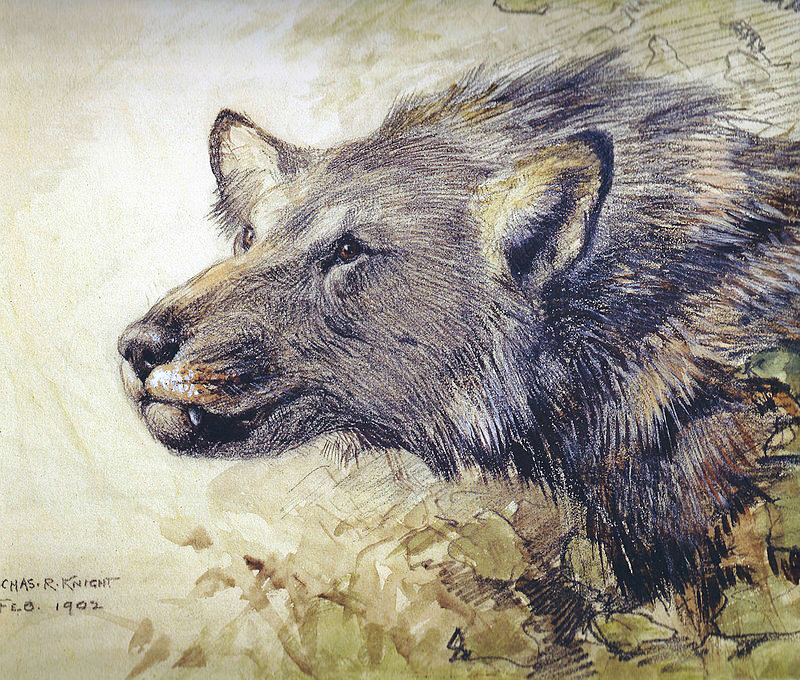
Bone Crusher, Source: Charles R. Knight, 1902, Public Domain
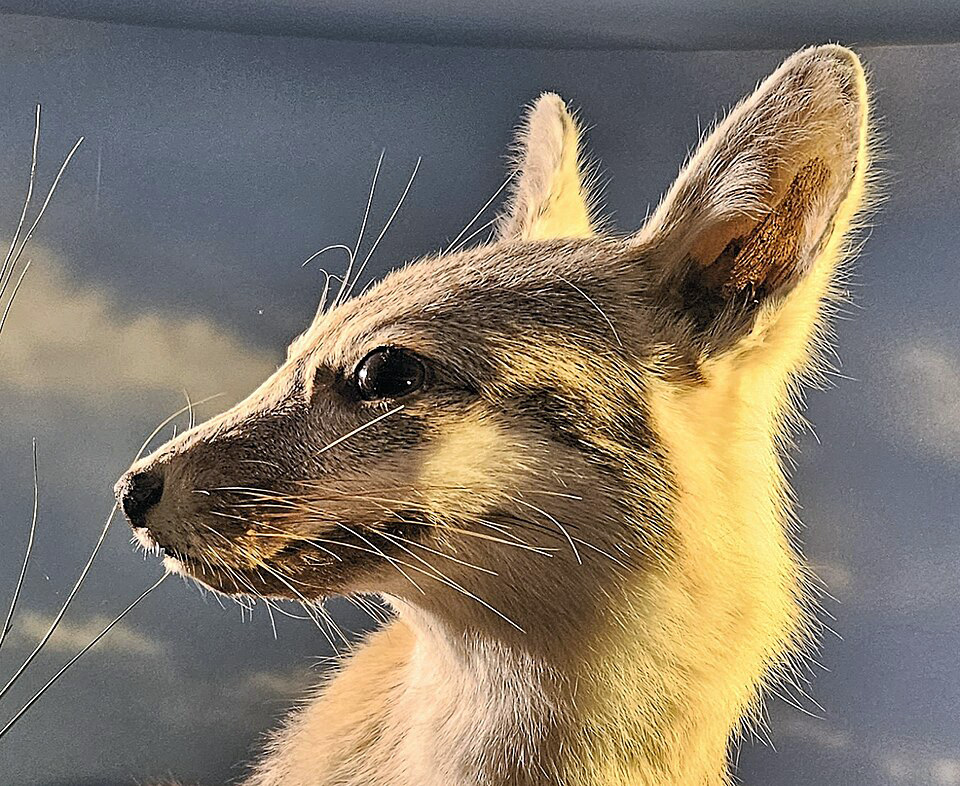
Gray Fox, Source: Wikimedia
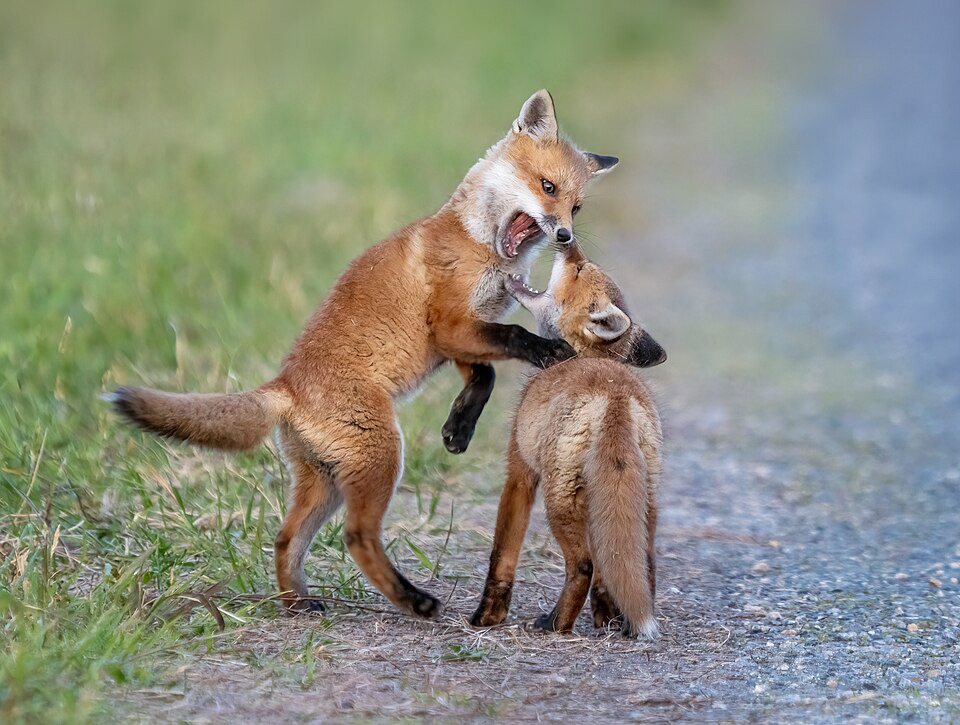
Red Fox, Source: Wikimedia
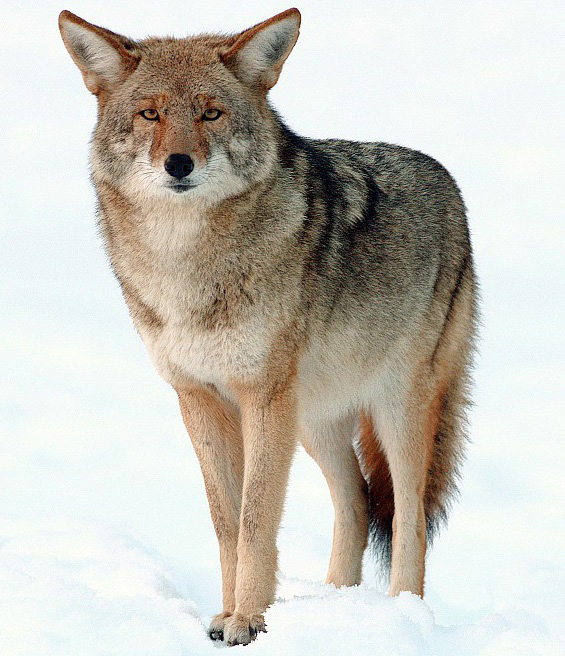
Coyote, Source: Wikimedia
