
Book of the Month
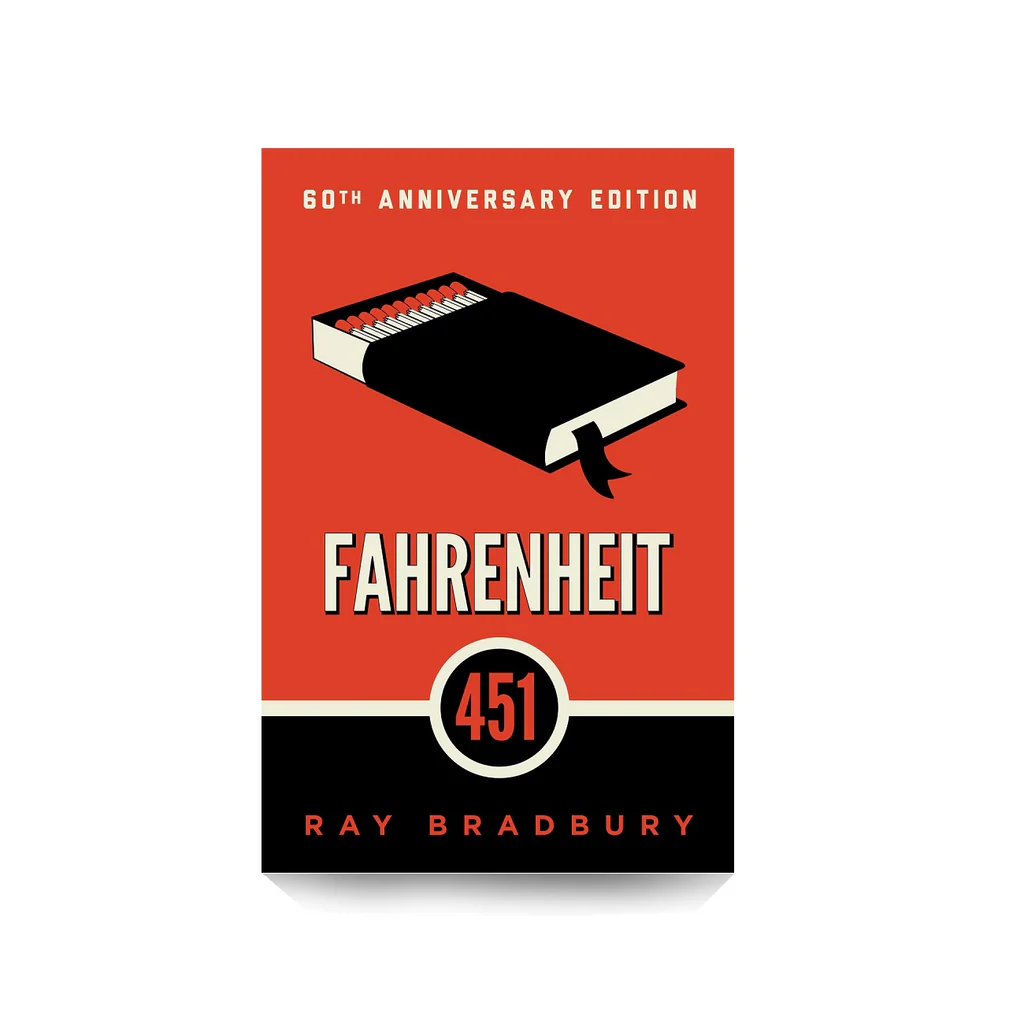
Fahrenheit 451
by Ray Bradbury – published in 1953 – a dystopian novel
by Michele Tester
I picked the book Fahrenheit 451 for my book club when it was my turn to pick. Years ago, my youngest son was assigned to read this book in school, so I decided to read it after he finished. I’ve read it several times since, and when I decided to pick it for my book club, I was excited to hear what everyone would think of it and what their perceptions would be.
I have to say that I’m not always a fan of books that are considered classics. Sometimes, after reading a classic, I am left pondering why it was even designated as one.
A book is considered a classic because of its relevance and influence over time, when it continues to be studied, discussed, analyzed, and enjoyed, resonating with readers across generations.
Ray Bradbury’s Fahrenheit 451 is considered a classic, and after reading this classic, I understood why. It is a deep and thought-provoking novel. I love reading books that really get me thinking, that explore universal themes, offer insightful perspectives, and leave me pondering my world, long after I finish reading it. This book did not disappoint.
Ray Bradbury’s writing style in Fahrenheit 451 has often been cited as being “lively, lyrical, and descriptive, characterized by vivid imagery, figurative language, and a rhythmic flow.” Bradbury uses a plethora of metaphors, similes, and personifications to paint vibrant pictures and convey philosophical ideas.
This book is a dystopian novel that explores themes of censorship and conformity, the power of knowledge, the destructive nature of technology, the suppression of free thought, the impact of mass media, and why sheltering people from feeling uncomfortable or from conflict does not lead to happiness. Actually, it leads to quite the opposite.
The main character, Guy Montag, is a fireman. But in Montag’s world, firemen start fires rather than put them out. They set fires to books and buildings that contain books. In Montag’s world, the burning of books is a direct way for the “government” to restrict the flow of information and knowledge to people, ensuring that citizens are not exposed to diverse perspectives, critical thinking, individualism, or adversity.
Montag begins to question the oppressive society he lives in after encountering Clarisse, a free-spirited young woman who encourages him to think for himself. Clarisse’s questioning of happiness and her observations about the lack of meaningful connections in Montag’s society spark his internal conflict. Montag makes a transformation from a fireman to a rebel, ultimately questioning the authority of the government and the societal norms that he once blindly adhered to, coming to the realization that he has been living a superficial life without true happiness or satisfaction.
I believe this book was way ahead of its time. Written in 1953, Ray Bradbury examines themes of censorship, mass media influence, instant gratification, society’s obsession with mindless entertainment and escapism, and the dangers of blind conformity, which reverberate strongly in today’s society, particularly with the rise of social media and the spread of misinformation.
In essence, Fahrenheit 451 is a cautionary tale. It will make you contemplate all the possible destructive consequences of the obsession with technology and mindless entertainment, the dangers of censorship, the perils of readily accepting information without questioning its validity, and the vital importance of individual freedom and critical thinking, all of which are relevant in our modern world. Ray Bradbury was definitely ahead of his time.
