
Ghosts of Frederick County
by Richard D. L. Fulton
The boundaries which divide Life from Death are at best shadowy and vague. Who shall say where the one ends, and where the other begins?
– Edgar Allen Poe
Ghost and spirit stories and ghostly hauntings are as old as civilization itself, with virtually every culture on Earth having stories of spirits or ghosts embodied within their legends. According to many anthropological sources, ghost and spirit lore exists in nearly every culture worldwide, reflecting universal human fascination with the unseen, the unexplained, and the fear of death.
The oldest depiction of a ghost/spirit appears to have been inscribed on a 3,500-year-old clay tablet dating back to Babylon, according to an article titled “3,500-Year-Old Babylonian Tablet May Contain Earliest Known Depiction of a Ghost,” published in the Smithsonian Magazine on October 22, 2021.
The oldest known ghost story was recorded in the first century A.D. by Pliny the Younger, who wrote about “the spirit of an old man in a beard and wearing chains (that) haunted his home in Athens,” according to the North Bergen Free Public Library website.
Generally, most of the individuals involved in paranormal investigations have distinct definitions of what a ghost is and what a spirit is, that being that a ghost is merely a repetitive, reoccurring image of a place or event or deceased person (or animal) that cannot be interacted with, while a spirit is that of a deceased person or animal with which a living person can interact.
Emmitsburg
Ghostly encounters between living and deceased residents of the Emmitsburg area are not terribly uncommon.
Paranormal activity has, over time, been frequently reported of a phantom nun of the former Saint Euphemia’s School and Sisters’ House (wherein one time, a police K-9 refused to enter a room in the basement), to the “orbs” of the former St. Joseph’s Academy, and the ghost of Burlando Hall, and a number of private homes, as per “Spirits of Emmitsburg – Ghostly Encounters in a Small Town,” written by the author of “Ghosts & Legends of Frederick County,” and published in the October 19, 2006, edition of The Emmitsburg Dispatch.
But Mount Saint Mary’s University, including the nearby grounds of the National Shrine Grotto of Our Lady of Lourdes, seems to be a hotspot for ghostly activity, including the ghosts or spirits of Father Simon William Gabriel Bruté, and even Saint Elizabeth Ann Seton.
According to “Mount St. Mary’s University and Father Simon Gabriel Bruté’s Ghost,” by Michael Kleen (michaelkleen.com), Bruté’s ghost or spirit seems particularly fond of Room 252 in Brute Hall, wherein he reportedly had relocated various objects in the room and wherein electronic devices would exhibit “strange behavior.”
However, Kleen noted that Bruté’s appearance has also been reported elsewhere on the university campus.
Bruté became associated with the Mount through his having served as an assistant to Mount founder, Father John DuBois (1810-1812 and 1818-1834), and his teaching literature and theology at the then-college.
Elizabeth Ann Seton, who would become the first native-born American saint, arrived in Emmitsburg when she relocated there in 1809 from Baltimore, thereby subsequently establishing the Order of the Sisters of Charity of St. Joseph.
Her home, the “Little White House,” had been constructed for her by Michael Charles Adelsberger in 1819 (the original 1819 contract between the sisters and Adelsberger was found several years ago among the belongings of the author’s wife, E. Catherine Curtis, a great-great-great-granddaughter of Michael Charles; a copy of it was presented to the sisters).
According to the Civil War Ghosts website (gettysburgghosts.com), the spirit or ghost of Seton has been reported to have been seen “in the gardens and walkways of the Mount,” or “wandering quietly among the statues (in the nearby National Shrine Grotto of Our Lady of Lourdes).”
Thurmont had its own mischievous spirit as the “Overall Man,” so-named because he was seen, or imagined, wearing overalls whenever he appeared, according to “Ghosts and Creatures in the Catoctins,” an undated article in the archives of The Catoctin Banner.
Apparently, the spirit was something of a trickster and practiced his “trade” in a particular home on Main Street, wherein he was known for frequently pulling bedcovers off sleeping residents in the middle of the night, turning lights on throughout the house, closing bedroom doors after they had been left open, and shifting silverware and assorted utensils around in their drawers.
frederick
Winchester Hall, located at 12 East Church Street. In Frederick City, which once served as the home to the Frederick Female Seminary and presently houses the county government, it was utilized during the 1862 Battle of Antietam as an impromptu hospital for thousands of wounded soldiers.
In the aftermath, a second tragedy took place at the facility when construction workers, who were preparing for the construction of an additional building on the grounds, uncovered countless human skeletal remains, with the end result being that they were instructed to dispose of the bones with the dirt that was being removed, according to the National Museum of Civil War Medicine website.
According to the Lizzie Borden Ghost Tours website (lizzie-borden.com), Winchester Hall reportedly “harbors ghostly figures, chilling screams, and objects that seemingly move on their own.”
The Schifferstadt house, located at 1110 Rosemont Avenue in Frederick City, was originally built by Elias Brunner, sometime after he had acquired the site in 1753, according to the Jefferson Patterson Park and Museum.
Schifferstadt takes its name from the hometown of the Brunner family.
Today, the house serves as the headquarters of the Schifferstadt Architectural Museum and, according to the Frederick Landmarks’ website (fredericklandmarks.org), it remains the oldest house in Frederick that is still open to the public.
According to Lizzie Borden Ghost Tours, strange noises have been reported within the home, as well as flickering lights. And so, add to that, unmistakable feelings “of being watched.” The ghost tour further notes, “Some believe that the spirits of its earliest occupants remain tied to the home, silently observing the passage of time…”
brunswick
The Brunswick Heritage Museum, 40 West Potomac Street, in Brunswick, is a rather “oddball haunting” wherein the spirits seem to actually enjoy messing with the model railroad on display therein.
Today, the Brunswick Heritage Museum shares its location with the National Park Service – Brunswick Visitor Center. The building actually dates way back to 1904, and previous occupants included the Order of Red Men fraternal lodge, the Fraternal Order of Eagles Brunswick Aerie No. 1136, and other commercial uses, including a drug store (which the author of this article frequented for his monthly supply of comic books back in the day).
Today, the Brunswick Heritage Museum apparently has had a few “after-hours” visitors, one in the form of an apparition of a lady wearing a white dress, which has reportedly been seen within the museum drifting through corridors, and at least one spirit that apparently enjoys messing with the model railway on display, according to marylandhauntedhouses.com.
For more on the haunted places of Frederick County, visit Maryland Ghost Tours’ website at marylandghosttours.com, or search for “Frederick County, Maryland ghost tours” online.
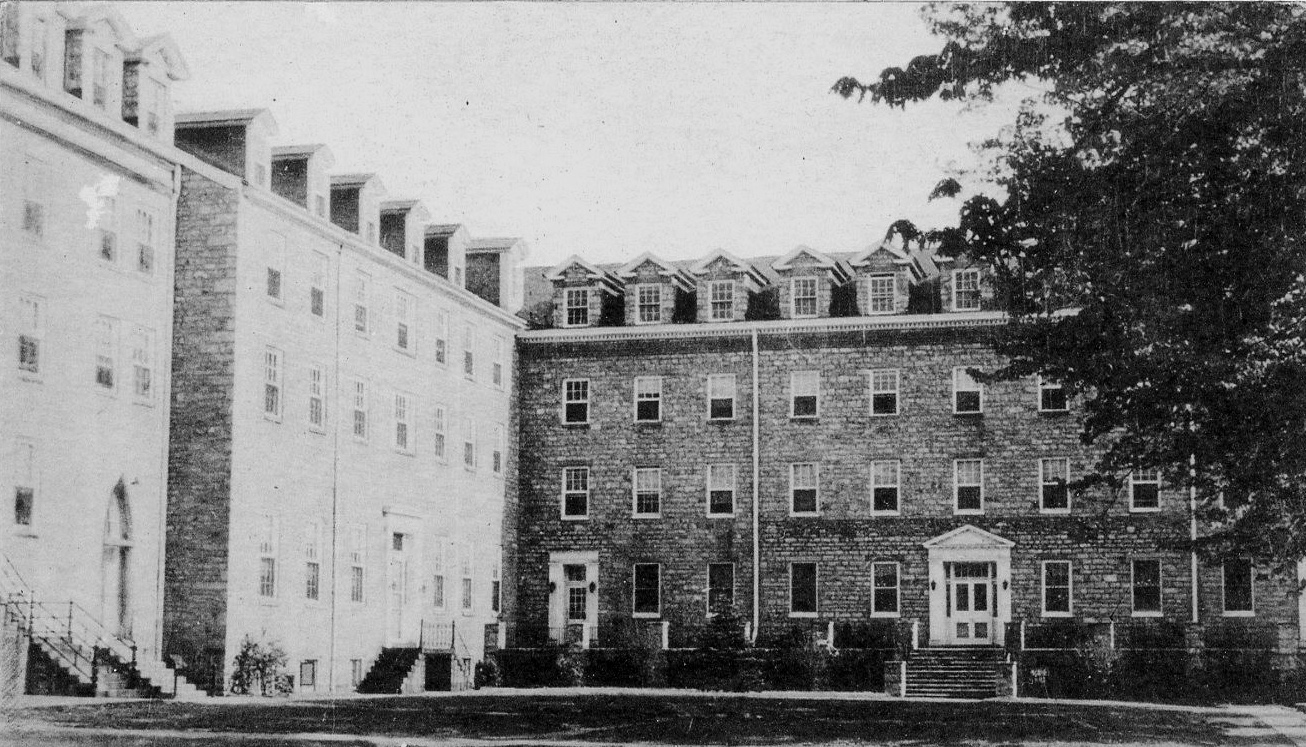
McCaffrey Hall, Brute Hall, Mount St. Mary’s College, Emmitsburg. Source: Collection of E.Catherine Curtis
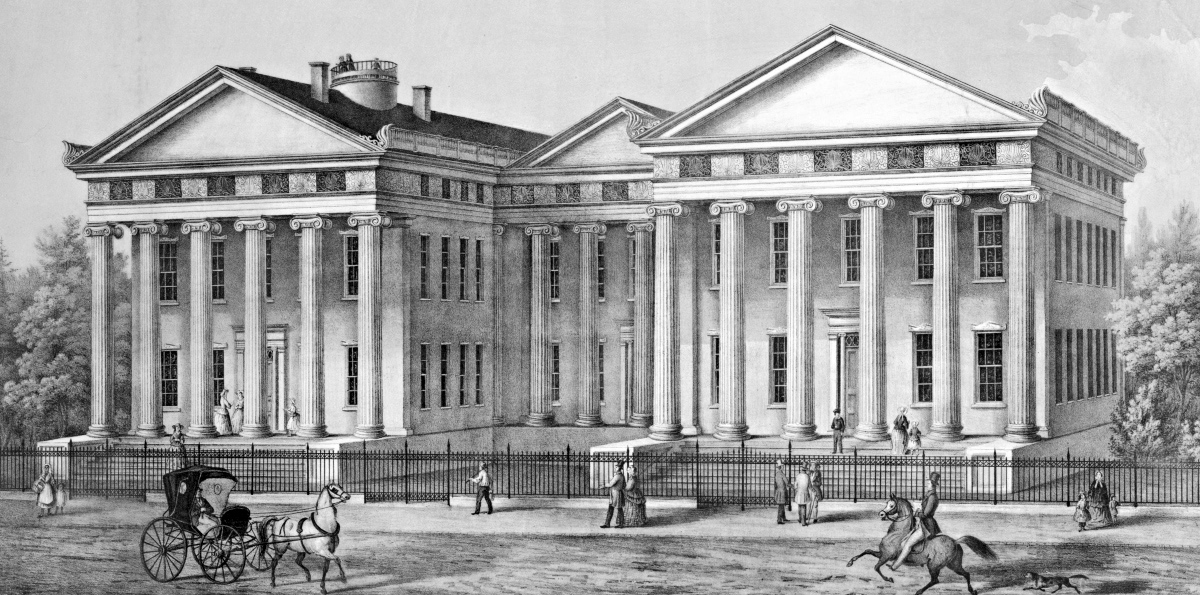
Winchester Hall as it appeared when it housed the Frederick Female Seminary. Source: Library of Congress
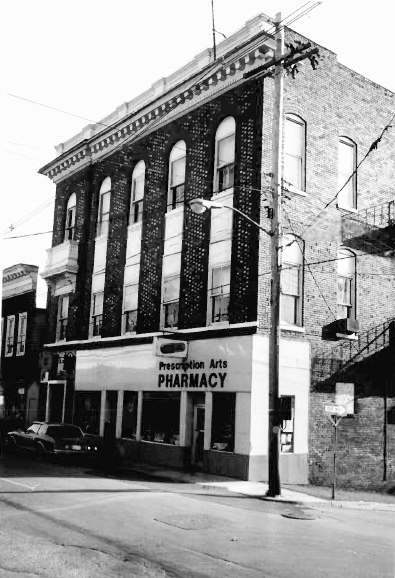
Original Brunswick building, which now houses the Brunswick Heritage Museum. Source: Wikipedia
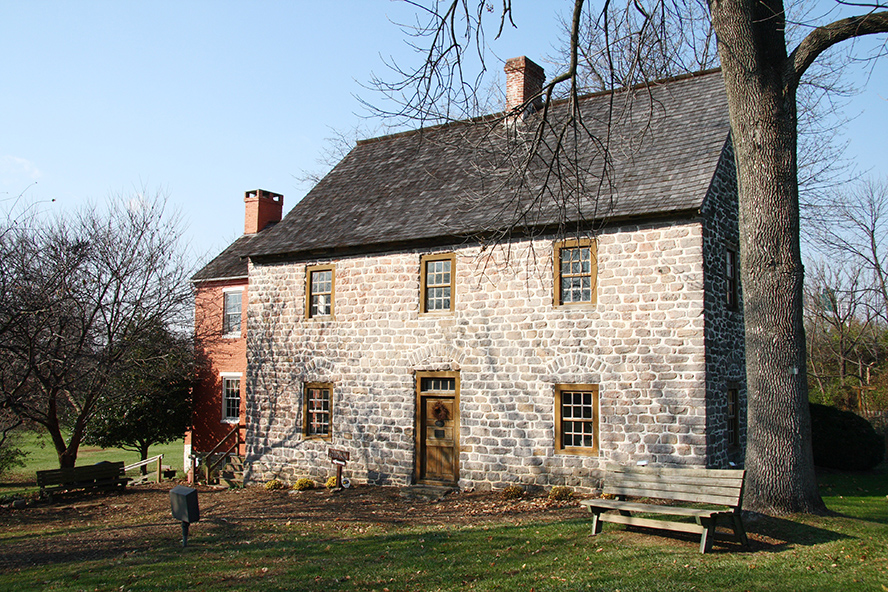
Schifferstadt house on Rosemont Avenue in Frederick. Schifferstadt house on Rosemont Avenue in Frederick.
