
When Maryland Prepped for WWIII
by Richard D. L Fulton
Now, therefore, I, Dwight D. Eisenhower, President of the United States of America, by virtue of the authority vested in me by the aforesaid Federal Civil Defense Act of 1950, do hereby proclaim the existence of a state of Civil Defense emergency.
– President Dwight D. Eisenhower
The Cold War technically lasted between the late 1940s to the early 1990s, but the timeframe that had the most impact on the civilian population occurred in the 1950s and the early 1960s.
The Cold War broke out in the wake of World War II, as a direct result of the Union of Soviet Socialist Republics (USSR) developing a nuclear weapon, which resulted in a fierce ideological struggle between Western democratic capitalism and Eastern communist authoritarianism, and the ensuing hostilities between the United States and the USSR and their respective proxies, according to “Explore Nike Missile Site BA-79: A Cold War Relic in Our Backyard,” by Jody Arneson, published on September 10, 2024, on midatlanticdaytrips.com.
Preparing for “Armageddon”
The auspices of educating and training the general populace of Maryland fell predominantly upon the shoulders of the Civil Defense, notably the Maryland Civil Defense Agency, which was responsible for coordinating safety programs, overseeing nuclear attack drills, and managing shelter training for residents and municipalities across the state.
Since there was little hope of surviving an actual detonation of the nuclear bomb, most of the activities focused on the secondary effects of a nuclear bomb strike: surviving the shock waves that would emanate from a detonation and protection methods to deal with the radioactive fallout from a nuclear explosion.
In order to alert the citizenry of an “imminent” nuclear threat, Maryland, and the country, were peppered with Civil Defense warning sirens, which had their own unique tones to not be confused with other fire and disaster (such as weather-related) warnings.
The sirens were tested routinely, adding to the general nervousness of the populace of the times.
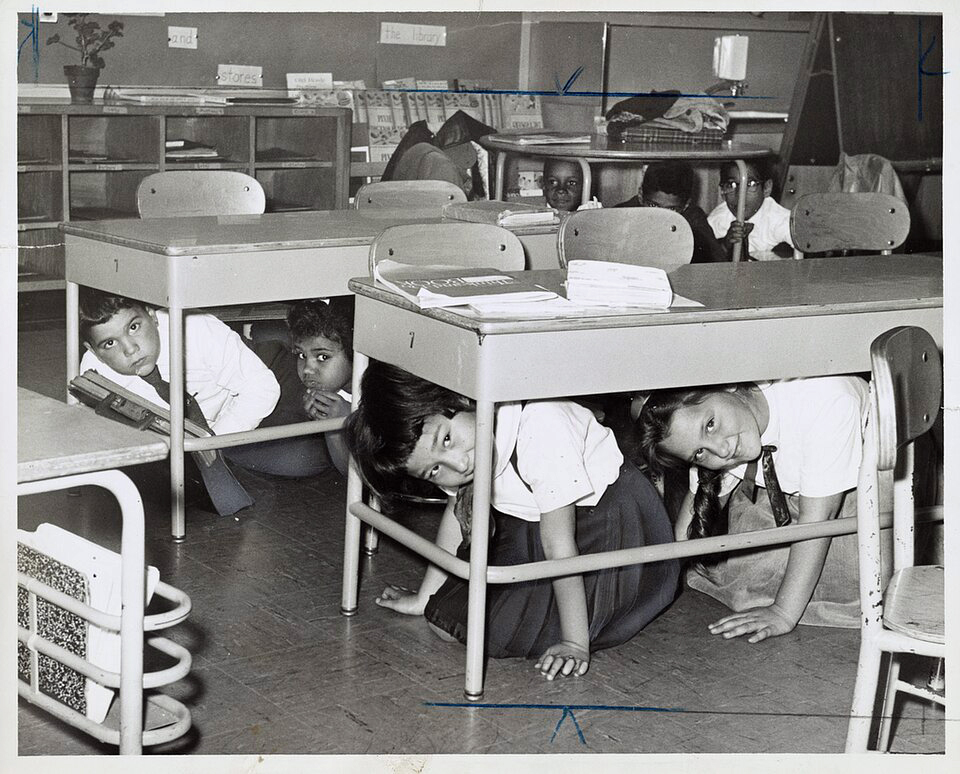
Many of those who lived in the 1950s and early 1960s and were young enough to have been students at the time, are likely to have never forgotten the intimidating and somewhat frightening “duck and cover” drills.
If and when an actual alert was given by sirens and media, students were instructed to duck under their desks or a table and cover their heads with their hands or books, if for no other reasons than to protect the students from any flying glass or brick fragments, resulting from the shock waves of a detonation.
Finally, the Cold War triggered an avalanche of establishing public and home “fallout” shelters in Maryland, as elsewhere, when the federal government launched the Community Fallout Shelter Program in 1961.
In theory, these were places that were shock-proof and even self-sustaining for their occupants. “Directional fallout shelter signs used to be commonplace on street corners, pointing the public to protected areas for when the unthinkable happens,” according to True Preppers’ website.
Public shelters were established in numerous state and municipal buildings and even campuses. For example, the University of Maryland began the process of constructing 34 fallout shelters on campus in 1961, and had 43 shelters by 1971, according to “Who’s Afraid of the Big Bad Bomb?” published on November 9, 2018, by umdarchives.
As for the homefront—literally—homeowners could buy prefabricated fallout shelters for as much as $2,000 in today’s monetary valuations, or build one of their own in a specially-built out-building or in the family basement. Numerous publications were printed for those who wished to build their own shelter, such as the U.S. Government’s The Family Fallout Shelter booklet.
The “Ring of Fire”
In 1954, the Army began to establish continental Nike anti-aircraft missile installations at various places in Maryland as part of a ring of sites to protect the greater Baltimore-Washington, D.C. metropolitan area from any attempted incursions made by long-range, nuclear-armed Soviet bombers.
The first of these launch sites was in Fort George G. Meade, with launch sites subsequently established through the 1950s in the counties of Anne Arundel (Jacobsville, Davidsonville, and Skidmore), Baltimore (Phoenix/Sweet Air, Fork, Granite, Cronhardt), Charles (Mattawoman/Waldorf), Hartford (Edgewood/Aberdeen/Lauderick Creek launch site), Kent (Chestertown), Montgomery (Rockville, Derwood, and Gaithersburg), and Prince George’s (Brandywine/Naylor, Croom/Marlboro, and Accokeek), according to an article “List of Nike missile sites” at wikipedia.org.
The missile launch sites were initially armed with Nike-Ajax surface-to-air missiles, and later the nuclear-capable Nike-Hercules surface-to-air missiles.
Of the more than a dozen missile launch sites in Maryland during the Cold War, one of the sites located in Granite has been undergoing restoration by the Civil Air Patrol, Maryland Wing Headquarters since the organization began leasing the site from the State of Maryland, beginning in 2018, according to the Civil Air Patrol, Maryland Wing Headquarters website.
For tours of this Cold War relic, contact the Civil Air Patrol Maryland Wing Headquarters at phone number 410-750-6394, or by email at granite@mdwg.cap.gov.
Maryland Troops Activated
During the late 1950s and early 1960s, the Maryland 104th Fighter Squadron, a section of the Maryland Air National Guard 175th Wing, was reorganized as a fighter-interceptor squadron and “tasked with defending the Baltimore-Washington region against possible Soviet bomber attack,” according to the State of Maryland’s National Guard website.
Additionally, according to the National Guard website, around the time the 104th Fighter Squadron was designated as a fighter squadron, the Maryland Army National Guard’s 70th Anti-Aircraft Artillery Regiment was directed to provide ground-based defense against bomber attack.
This regiment was initially armed with World War II-era anti-aircraft guns but had since been upgraded to Nike-Ajax surface-to-air missiles.
Maryland also took other steps to upgrade its Cold War military defense strategies.
In 1955, the state established the Air Guard’s 135th Air Commando Group and subsequently created the Towson-based 16th Special Forces Group, Company B (resulting in Maryland having been the first state to do so), according to the National Guard website.
When the Nukes “Fell” on Maryland
Flying nuclear weapons-armed aircraft over civilian populations proved as being risky—at best—during the Cold War, as Marylanders found out during 1964.
Residents of Grantsville, a town in the northern part of Garrett County, were weathering out a blizzard-like snowstorm when a B-52, armed with two thermo-nuclear bombs, approached their area.
The B-52 was one of a good number of armed bombers that were routinely flying missions close to Soviet military targets, and then breaking off and returning to their base. According to an article entitled “Maryland’s Nuclear Moment,” published in Go Outside in a March 7, 2017, article, the purpose of these near incursions was to keep an eye on Russian launch sites to detect early launchings of nuclear missiles.
Around 1:40 a.m. on January 13, one of the B-52s went down over Savage Mountain during a flight from Massachusetts to Georgia.
Flight Commander Major Thomas W. McCormick reportedly told The (Baltimore) Sun, “I encountered extreme turbulence. The aircraft became uncontrollable and I ordered the crew to bail out,” according to an account published in the January 1, 1964, issue.
Major Robert J. Townley (radar bombardier) died in the wreckage. Major Robert Lee Payne (navigator) died of exposure after ejecting, and Tech. Sgt. Melvin F. Wooten (tail-gunner) died of exposure and injuries after bailing out. Major Thomas W. McCormick (pilot) and Captain Parker Peedin (co-pilot) survived.
The two 24-megaton nuclear bombs were removed by Glen Giconi, owner of M&S Stone Quarries, and employee Warren Miller, utilizing a front-end loader, to load the then-inert bombs onto two trucks, both of which then delivered them to a local airport, according to a story in the January 16, 1964, edition of The Cumberland News.
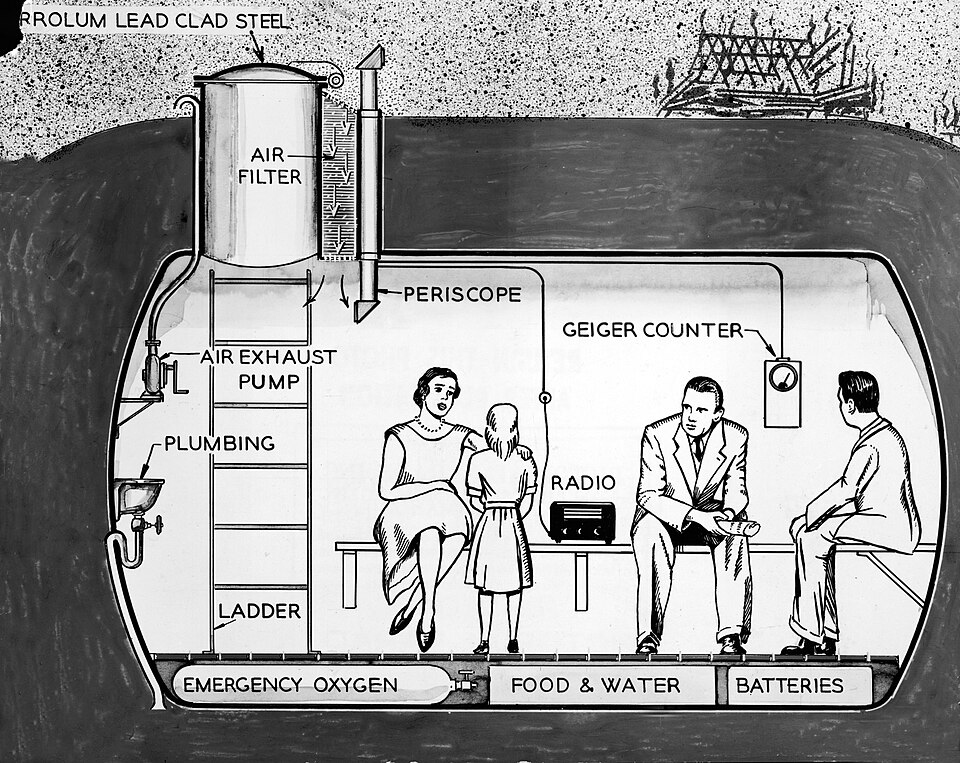
One of many home fallout shelter designs typical of the Cold War. Source: Wikimedia
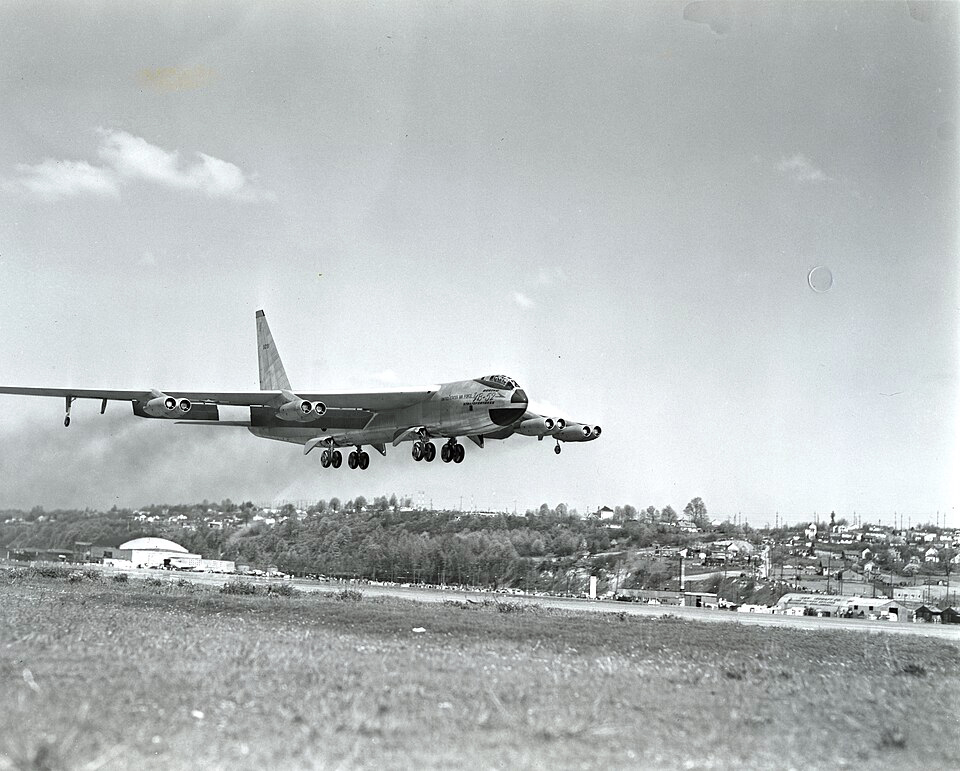
B-52 bomber similar to the one that crashed at Savage Mountain. Source: Wikimedia
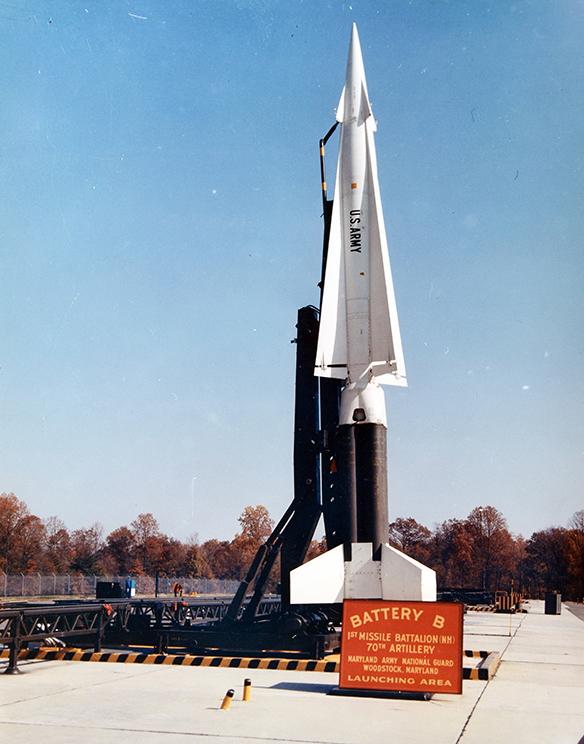
Nike missile launch site. Source: Civil Air Patrol Maryland Wing Headquarters
