
Maryland Felines
Past and Present
by Richard D. L Fulton
The first feline, Proailurus, evolved some 25 million years ago and lived in Europe and Asia. Its Latin name, Proailurus, means “before cats,” but it has since become recognized as the earliest true cat, and was about the size of the modern house cat.
But an evolutionary descendant of Proailurus, called Pseudaelurus, which evolved some 20 million years ago and lived in Europe, Asia, and North America, is regarded as the direct ancestor of the major divisions of today’s large cats (the Pantherinae, which include panthers, lions, and tigers) and small cats (the Felinae, which include the modern domestic cats, cheetahs, lynx, and bobcats), as well as the Machairodontinae, better known as the saber-toothed cats (often mistakenly referred to as saber-toothed tigers).
Of the three major groups, only the Machairodontinae became extinct as a whole.
As far as the fossil record of Maryland’s first felines is concerned, the extent of those that may have inhabited the state in the ancient past may never be fully known because of the rarity of the preserved remains of terrestrial mammals in the state.
In fact, what is known about Maryland’s prehistoric felines comes from a single site, that being the Cumberland Bone Cave (for more on this site, see “Maryland Caves and Caverns,” by Richard D. L. Fulton, in the February 2026 issue of The Catoctin Banner).
Maryland’s Oldest Felines
Only two prehistoric feline remains have been found in Maryland, both of which were found in the Cumberland Bone Cave. Both dated circa 10,000 years of age, one being a member of the Machairodontinae, and the other a member of the Pantherinae.
The Machairodontinae were represented by the remains of the saber-toothed cat, Smilodon fatalis.
According to the National Park Service, Smilodon fatalis generally had a body length of around 6 feet and weighed between 350 to 620 pounds. The Latin name fatalis referred to the saber-toothed cat’s 11-inch-long upper canine teeth. Smilodon fatalis, whose remains in Maryland, as previously stated, were dated at around 10,000 years old, was also one of the last of the Machairodontinae, as that was the approximate timeframe in which all of the Machairodontinae became extinct.
The saber-toothed cats were presumed to have been primarily ambush predators. They probably fed predominantly on deer and tapers but were not shy at taking on larger game animals, such as the contemporary bison.
The Pantherinae were represented by the remains of the jaguar Panthera onca augusta. While the jaguar Panthera onca still exists, Panthera onca augusta (augusta being a variety or subspecies of Panthera onca) does not exist.
The Cumberland Bone Cave jaguar was a much more powerful animal than the existing jaguars, having been approximately 20 percent larger.
When Cougars Prowled
The Eastern Cougar (also called the Eastern Panther and mountain lion), Puma concolor couguar, once ranged from southern Canada to South Carolina, which, of course, included Maryland. These cougars are not the same species as those reported as being panthers in Florida.
The Eastern Cougar hunted primarily “white-tailed deer, the now-extinct eastern elk, and even moose, along with smaller animals,” according to the Aark Wildlife Rehabilitation and Education Center’s website.
No breeding cougar populations have been substantiated within the former range (Puma concolor couguar) since the 1920s, according to the U.S. Fish and Wildlife Services’ (FWS) 1981 “Eastern Cougar Recovery Plan.” However, in 1981, the FWS was uncertain if the Eastern Cougar was actually extinct, based on numerous, but unverified, sightings. The plan was devised to verify the existence of any of the animals, and to help the cougars increase and protect their numbers.
In fact, the entire Eastern Cougar population had already been killed off by humans (beginning with the earliest settlers), habitat loss, and the growing scarcity of their prey, according to the Nature Serve Explorer website. During 2018, the FWS officially declared Puma concolor couguar extinct.
Last of the Wildcats
Only one wildcat remains in Maryland: the Lynx rufus, also known as the bobcat, named for its short, bobbed tail.
These mid-sized felines, weighing between 15 and 40 pounds and with a length of 29 to 39 inches, range from Canada to throughout the United States, and into Mexico. They have mostly escaped human efforts to eliminate them, as, due to their size, they rarely pose a threat to domestic animals.
According to the Maryland Department of Natural Resources (DNR), Maryland bobcats tend to live in Garrett, Allegany, Washington, and Frederick counties. Still, they can occasionally be found as far east as the western shore of the Chesapeake Bay. They can live as long as 18 years.
Young bobcats have even been mistaken for stray or feral house cats. Case in point, some years ago, a resident of Carroll Valley Borough posted a picture of a cat on their Facebook page, stating they had been feeding it on their back portico, and wanted to know if anyone would be interested in adopting it. The author quickly messaged the poster and informed them that the animal in question was not a house cat. It was a young bobcat! They rather quickly deleted their post.
No one seems to know how many bobcats live in Maryland, but the experts seem to agree that their numbers are on the rise. However, they continue to be listed as uncommon and cannot be legally hunted or trapped in Maryland.
Felines Amongst Us
Although many members of the Felinae are indigenous to the Americas, Felis catus—the domestic house cat—is not one of them.
All the house cats were descended from Felis silvestris lybica, the so-called African wildcat (which also inhabited West and Central Asia). The DNA from modern cats is virtually identical to that of the African wildcat.
So, how did the domestic cats that today patrol the farmlands of Frederick County to protect the crops from rats and mice, or watch over the streets of Baltimore from the windows of high-rises, evolve from their wild African ancestors?
According to “How did cats become domesticated?’, published on the Library of Congress website, the association between African wildcats and humans began around 10,000 years ago in the Fertile Crescent in the Middle East, the location where, most authorities agree, farming began due to the nature of the soil and proficient water supplies.
But crops are subject to destruction by rodents, and while the crops attracted the rodents, the rodents attracted the wildcats, a fact apparently not lost by those Neolithic farmers, and thus nourished the budding relationship. But apparently, it was not commonplace to invite the wildcats to share their home with them.
That apparently began with the Ancient Egyptians. Current theories suggest that Egyptian domestication of wildcats was initially the result of raising them for sacrificial purposes, with a likely outcome that the friendlier cats among the intended victims were taken into the homes as pets.
But regardless of how the domestication process began, how was Felis silvestris lybica transformed during the process into a completely distinct species, Felis catus? New species breaking off from another species are often the result of one or two influences: either climate, or changes in behavior, or both.
As per “The Origin and Evolution of Cats,” by Xuan Jia, Institute of Life Science (animalscipublisher.com), recent research suggests that domestication led to changes in behavior, resulting in “many genetic mutations related to social behavior and diet…,” and that over the thousands of years, had created enough difference in the domesticated Felis silvestris lybica to transform them into a new species: Felis catus.
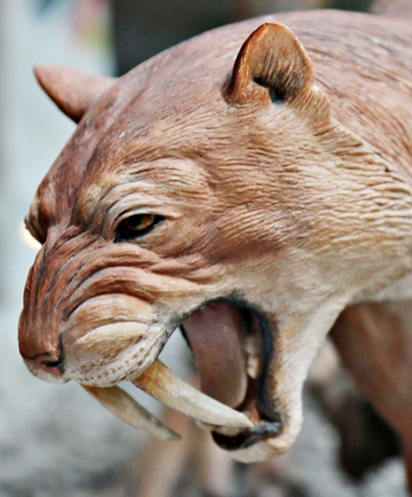
Saber-toothed Cat , Source: Wikimedia
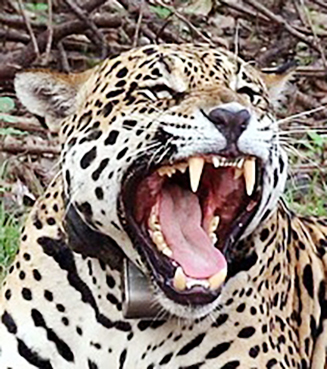
Panthera Jaguar, Source: Wikimedia
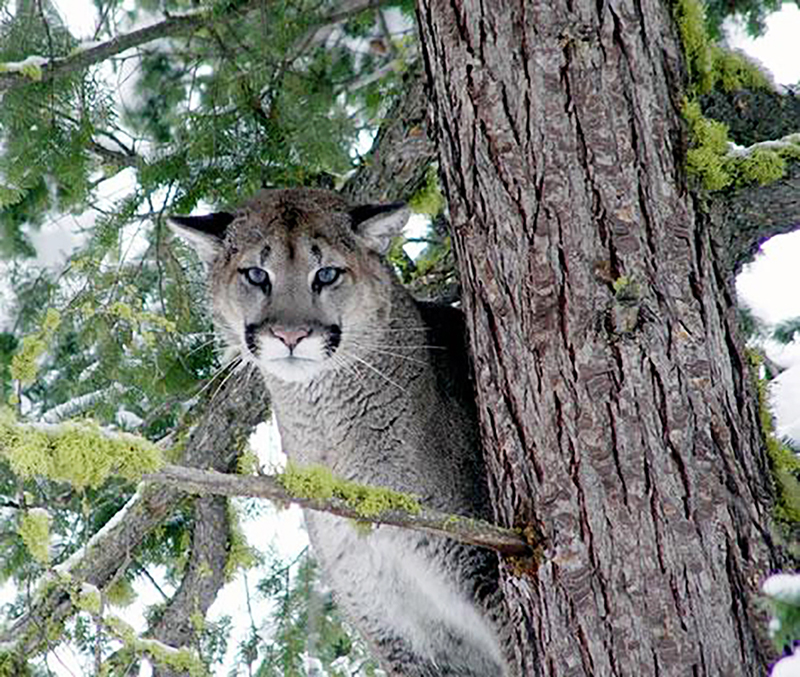
Puma Concolor Couguar, Source: wdfw.wa.gov
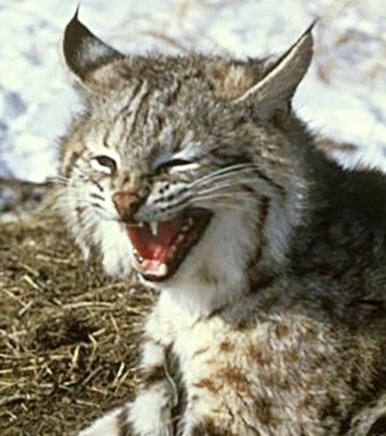
Lynx Rufus Bobcat, Source: fws.gov
